Beyond the Crystal Ball: Why Prediction Markets are Essential for Kenya’s Growth.
The Evolution of Forecasting — Why Kenya Needs Decentralized Data
In the world of finance and politics, the most valuable commodity isn't gold or oil—it’s accurate information. For years, Kenya has relied on traditional forecasting: a mix of government data, NGO reports, and media analysts. But as we’ve seen with recent global economic shifts and local market volatility, these traditional methods often suffer from "lag" and institutional bias.
The alternative? Prediction markets.
The Flaw in the "Expert" Model
Traditional forecasting is built on the premise that a small group of specialists can predict the future more accurately than the collective.
However, these experts often lack "skin in the game."
If an economist predicts a 5% growth rate and we hit 2%, here are rarely professional consequences for the inaccuracy.
This lack of accountability creates "noise"—projections based on aspirational goals rather than real-world data.
Prediction markets solve this by requiring participants to back their insights with capital, ensuring that only the most credible information moves the needle.
How Prediction Markets Work
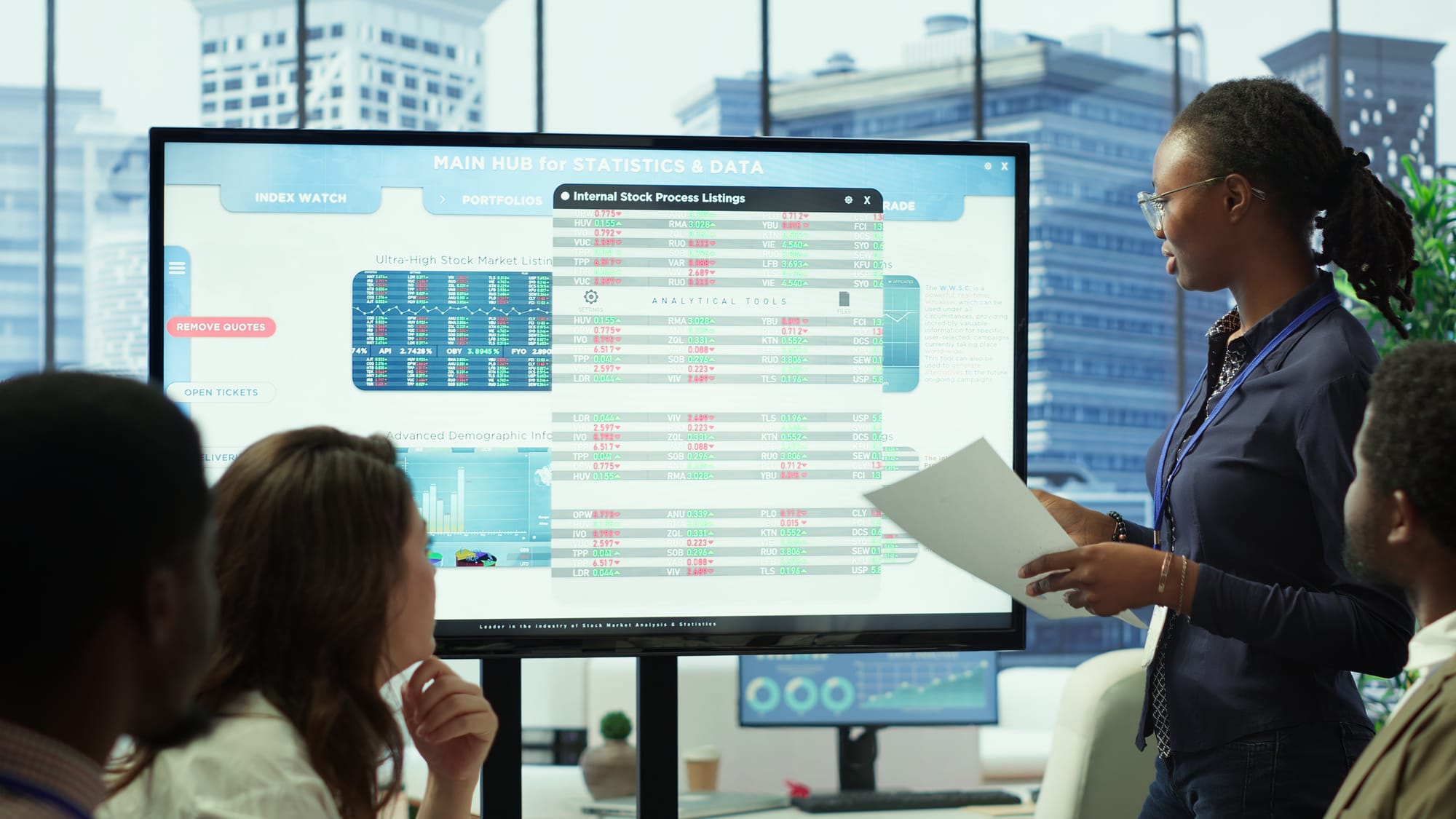
A prediction market is essentially a specialized exchange for outcomes. Rather than trading company shares, participants trade "contracts" based on real-world events.
Example: If a business owner anticipates the Kenyan Shilling reaching a specific threshold against the Dollar, they can take a position on that outcome. This acts as a financial hedge: if the currency shifts, the contract's value adjusts, allowing the business to offset its real-world foreign exchange risk.
This incentive structure creates a powerful "Price Discovery" mechanism. Individuals with proprietary data or unique local insights are incentivized to provide liquidity to the market.
The resulting market price reflects a real-time probability that is often far more accurate than any single poll or static report.
Why Kenya is the Strategic Frontier
Kenya is uniquely positioned to lead the adoption of decentralized forecasting for three key reasons:
- Digital Payment Infrastructure: With the maturity of M-Pesa, Kenya already possesses the secure "rails" necessary to facilitate the micro-transactions that power these high-frequency data markets.
- A Culture of Analytical Forecasting: Kenya has a highly engaged population that is already comfortable with outcome-based analysis. Prediction markets allow us to transition that "forecasting energy" into economic utility, where the data generated helps banks, farmers, and insurers plan for the future.
- The Need for Neutrality: In a landscape often influenced by political rhetoric, prediction markets offer a data-driven look at reality. They can forecast policy success and economic shifts with a level of neutrality that traditional human analysis simply cannot replicate.

The Path Forward
For prediction markets to thrive in Kenya, we need a shift in regulatory perspective.
We must move beyond viewing these platforms through the lens of entertainment and start seeing them as sophisticated risk-management tools.
By adopting these markets, Kenyan enterprises can hedge against volatility more effectively, and the public can access a clearer, unvarnished picture of the future. It’s time to stop guessing and start valuing the truth.
The future of Kenya isn't found in a crystal ball; it’s priced in the market.
This article is for informational purposes only and does not constitute financial or investment advice. Trading on Predicta Markets involves risk and may not be appropriate for all. Members risk losing their cost to enter any transaction, including fees. You should carefully consider whether trading on Predicta Markets is appropriate for you in light of your investment experience and financial resources. Any trading decisions you make are solely your responsibility and at your own risk. Information is provided for convenience only on an "AS IS" basis. Past performance is not necessarily indicative of future results.